
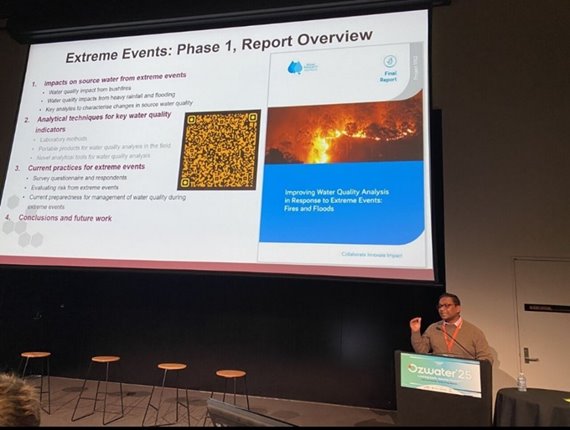
ChemCentre Scientist Dr Netramani Sagar presented key findings from a national survey on the risks extreme weather events pose to drinking water quality at Ozwater’25, Australia’s leading water industry conference. His work was also published as a technical paper in the official conference proceedings.
The paper Managing Water Quality Risk During Extreme Events (Bushfires and Floods): Results from a National Survey, co-authored with Dr Hanna May and Dr Kathryn Linge from ChemCentre, highlights the growing challenges faced by water utilities across the country as the frequency of bushfires and floods and impacts of climate change intensify.
Drawing on the experiences of 18 water utilities and regional councils, the study provides a comprehensive snapshot of how floods, storms, and bushfires affect source water quality, treatment operations, and infrastructure. The survey results reveal that such extreme events are now an ongoing management issue for water utilities, with all respondents reporting impacts from storm and flood events in recent years and the majority having been affected by multiple bushfire events.
Key findings from the study include:
- Identification of 55 water quality analytes of concern during floods and bushfires, including pathogens, cyanotoxins, disinfection by-products (DBPs), pesticides, metals, and chemicals related to fire retardants.
- Insights into current preparedness levels among utilities, revealing varied approaches to water quality monitoring during emergencies.
- The need for novel analytical methodologies and faster laboratory turnaround times to support real-time decision-making.
“This project helps fill a vital knowledge gap by identifying the most concerning contaminants and analytes that emerge following extreme weather events such as bushfires, floods, and storms”, said Dr Netramani.
“Understanding how the intensity of these events affects source water quality is key to developing robust, climate-resilient management strategies”.
The paper also recommends exploring rapid, portable water quality testing technologies and expanding the analytical suite of chemicals monitored post-disaster, including PFAS and unknown contaminants.
ChemCentre’s participation in Ozwater’25 underscores its role as a national leader in water quality analysis, supporting utilities and regulators in safeguarding Australia’s drinking water supply in an increasingly unpredictable climate.
The study was conducted as part of Water Research Australia Project 1152, with support from Coliban Water, Icon Water, Department of Health (Victoria), Melbourne Water, SA Water, Seqwater, South East Water, TasWater, Water Corporation of Western Australia, and Water NSW.