
From weathering of oils and dispersants testing, to baseline environmental monitoring, and source investigations, we can assist you in the prevention and management oil spills with our proven history of high quality, expert analysis, and unique modelling equipment.
Oil Weathering – Mackay Chamber
Mackay Chamber testing is recognised as the best laboratory method for modelling the weathering of an oil spill and the efficacy of an oil dispersant. Reproducing field conditions, the Mackay Chamber controls the leading variables in oil spill weathering – sea temperature, air temperature and wind speed.
Combining both weathering data with dispersibility testing on weathered oils gives data not only on whether dispersants will be effective, but whether they will continue to be effective as the spill ages (the ‘window-of-opportunity’).
Bulk Oil Weathering
Understanding the properties of oil as it weathers is essential for all oil spill management.
Heat Assisted Volume Reduction (HAVR) is a technique used to generate large volumes of weathered oil artificially in the laboratory. These weathered oils can then be used in dispersant trials for the most accurate results or tested directly for parameters such as:
- Density
- Viscosity
- Pour point
- Asphaltene
- Wax content

Exxon Dispersant Efficacy Test (ExDET)
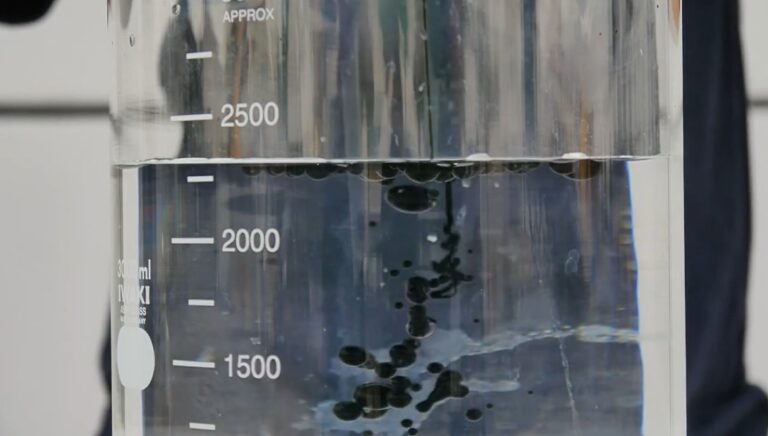
A small-scale bench test that determines how much oil an oil spill dispersant removes from the surface of the water, with all tests completed in quadruplicate this is robust method to measure the efficacy of an oil spill dispersant.
This procedure has been developed with the assistance of the Australian Marine Oil Spill Centre (AMOSC), and with input provided by Exxon’s Oil Spill Response Technology Group.
Additionally, ChemCentre have a vast array of environmental monitoring and testing services available to support your project.